

The true cost of a contested estate isn't found on a solicitor's invoice; it's measured in the permanent fracture of a family's shared history. Grief. Friction. Uncertainty. When the distribution of assets becomes a catalyst for conflict, the emotional toll can feel as heavy as the financial burden. You likely recognise that litigation often serves only to deplete the very inheritance it seeks to protect, while exposing private matters to the public record. Choosing a path of mediating disputes between will beneficiaries offers a more composed alternative that prioritises structural integrity over adversarial combat.
It's understandable to feel overwhelmed by the complexity of interpersonal dynamics during such a sensitive transition. In this article, you'll discover how professional mediation provides a strategic and empathetic framework to resolve friction while preserving your family legacy and asset integrity. We'll explore the logic of external intervention, the benefits of a discreet resolution process, and how to reach a sustainable agreement that satisfies all parties. By moving from a state of complexity toward a vision of structured resolution, you can protect both your wealth and your most important relationships.
Key Takeaways
- Recognise that the true cost of litigation isn't just financial; it's the permanent erosion of family trust and legacy.
- Discover how mediating disputes between will beneficiaries offers a discreet, confidential alternative to public court battles.
- Understand the mediator's role as a neutral facilitator who focuses on the structural integrity of the agreement rather than taking sides.
- Learn to enter the resolution process with composure by preparing for emotional nuances and focusing on shared long-term interests.
- Secure a sustainable outcome that provides a clear roadmap for the future and restores order to your family or estate.
Beyond the Legal Battle: The True Cost of Beneficiary Disputes
Estate distribution is rarely a clinical transfer of wealth. It's a collision. Financial assets, multi-generational narratives, and deep-seated emotional histories converge at a time of profound vulnerability. When a benefactor passes, the will often acts as a final metric of perceived value and status within the family unit. This transition is naturally volatile. While many instinctively turn to the legal system, litigation carries hidden costs that extend far beyond a solicitor's invoice. Trust erodes. Communication collapses. Families fracture. There's also the matter of public exposure; court proceedings become part of the public record, potentially damaging a family's reputation and privacy for years to come.
The Emotional Weight of Inheritance
Grief. Rivalry. Recognition. Fairness. These are the psychological triggers that often fuel inheritance conflict. Sibling dynamics that have remained dormant for decades frequently resurface when assets are on the line. One beneficiary might view a family home as a sacred legacy, while another sees only its market value. These competing perspectives are rarely about the money alone; they're about the need for validation. Internal efforts to organise a resolution often fail because the parties are too emotionally entangled to remain objective. Mediating disputes between will beneficiaries introduces a steady hand to this turbulence. It allows for a structured dialogue where emotions are acknowledged but don't dictate the final outcome.
Asset Depletion and the Litigation Trap
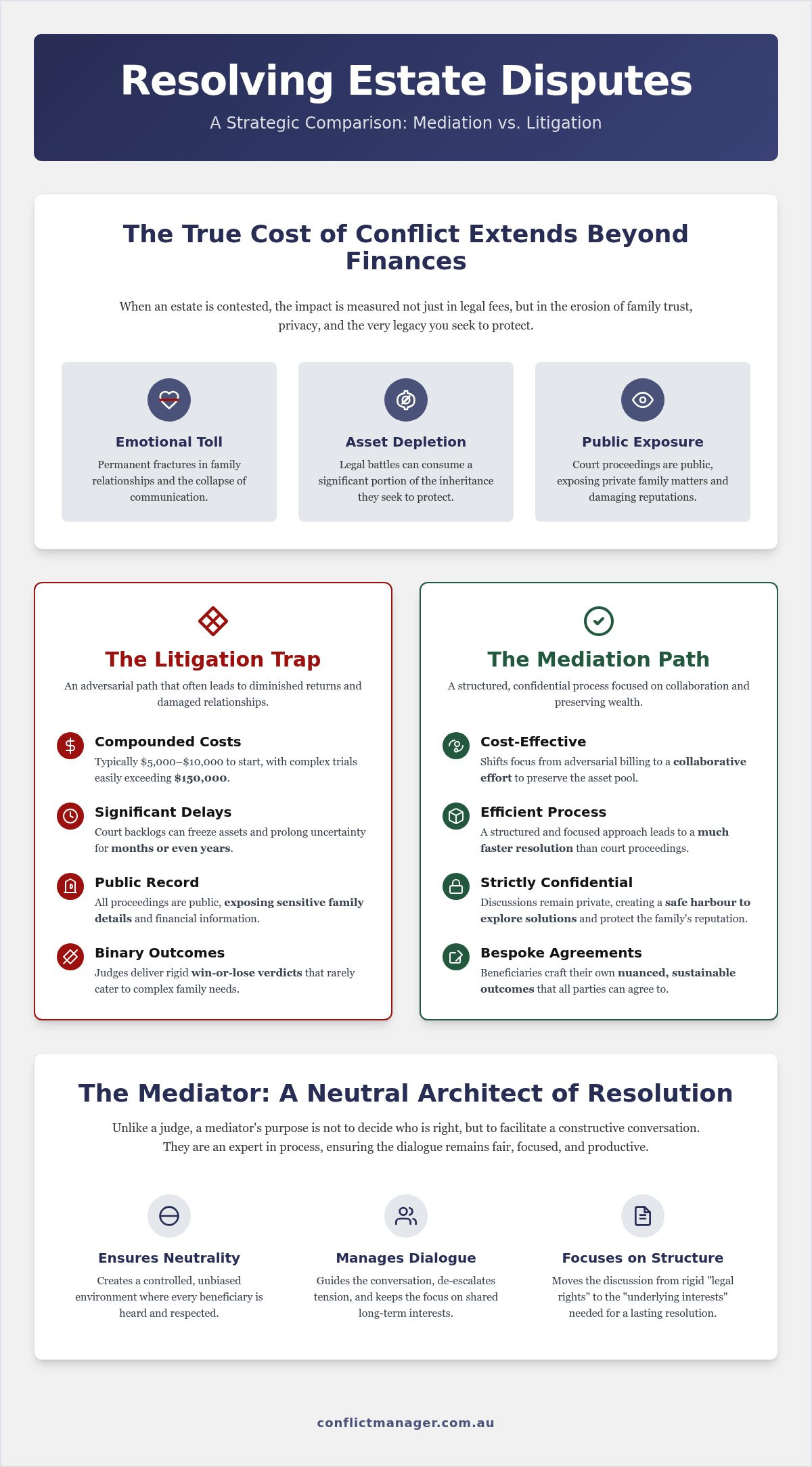
The financial reality of contesting a will in Australia is often a story of diminishing returns. Litigation thrives on an adversarial model that forces parties into rigid positions in their defence. This "adversarial spiral" can be devastating for the total asset pool. Consider the following risks of the litigation trap:
- Compounded Costs: Contesting a will typically costs a minimum of $5,000 to $10,000, and complex trials can easily exceed $150,000.
- Time Delays: Court calendars are notoriously slow, often keeping assets frozen for months or even years.
- Binary Outcomes: Judges deliver win-loss verdicts that rarely address the nuanced needs of a complex family structure.
Choosing a path of mediation is a strategic move to protect the integrity of the inheritance. It shifts the focus from a zero-sum game to a collaborative effort to preserve wealth. By engaging in this process, beneficiaries can avoid the litigation trap and focus on a resolution that respects both the financial reality and the family's long-term stability.
The Mechanics of Resolution: How Mediation Functions for Beneficiaries
Mediation is more than a simple meeting. It is a voluntary, confidential, and highly structured process designed to restore order where there is disruption. Unlike the blunt instrument of a court ruling, this approach is led by a neutral third party who serves as a steady hand. The mediator is an expert facilitator, not a judge. Their purpose is to manage the flow of communication and ensure the structural integrity of the dialogue, allowing the beneficiaries themselves to determine the final outcome. This shift from "legal rights" to "underlying interests" is vital. It moves the conversation away from what a person is strictly entitled to under law and toward what they actually need for a sustainable future.
Creating a Controlled Environment for Dialogue
Neutrality. Order. Composure. Establishing a neutral space, whether physical or digital, is the first step in lowering the emotional pulse of a room. In this controlled environment, the mediator introduces specific ground rules that govern how parties interact. These rules ensure that every beneficiary feels heard without the fear of being attacked or overshadowed. High-stakes environments require a measured pace. By using rhythmic pauses and deliberate silence, a mediator can de-escalate tension and provide the necessary room for reflection. This methodical approach allows parties to navigate difficult transitions without becoming emotionally entangled in the friction of the moment.
The Power of Confidentiality
Australian court proceedings are a matter of public record. For high-net-worth families, this exposure can be a significant liability. Mediation offers a discrete alternative where every discussion remains strictly private. This confidentiality is a strategic asset. It creates a safe harbour where beneficiaries can explore creative, bespoke solutions that they wouldn't risk proposing in an adversarial courtroom. When the fear of public disclosure is removed, the focus returns to preserving the family office and its sizable assets. If your family requires this level of discretion, engaging in professional family conflict resolution can provide a secure path toward a quiet, efficient settlement.
The flexibility of this process is its greatest strength. Every family is unique, and the process of mediating disputes between will beneficiaries can be tailored to the specific human and structural dynamics at play. It is a bespoke intervention that respects the weight of responsibility held by all stakeholders while providing a clear logic for moving forward.
Strategic Choice: Why Mediation Outperforms Litigation
Litigation is a gamble; mediation is a strategy. For those responsible for the stewardship of significant assets, the choice to move away from the adversarial nature of the court is often a mark of sophistication. The Australian legal system is notoriously slow, with contested estates often languishing for years before reaching a resolution. In contrast, the process of mediating disputes between will beneficiaries typically concludes in a matter of weeks. This efficiency is matched by financial predictability. While court costs are open-ended and can fluctuate based on the complexity of the trial, mediation allows for a more contained engagement. It provides the clarity and stability required to move forward without the threat of indefinite asset depletion.
Sustainable Outcomes vs. Court Orders
A court order is a blunt instrument. It imposes a decision from the top down, often leaving all parties feeling compromised or unheard. Because these decisions lack "stakeholder buy-in", they are frequently the catalyst for future friction or even further legal challenges. Mediation flips this dynamic. By reaching a mutually agreed-upon resolution, beneficiaries take ownership of the outcome. This ownership makes the agreement far more durable. These bespoke agreements can include clauses that a judge simply cannot order. Family governance rules, specific communication protocols, and non-financial conditions can all be integrated to ensure long-term harmony. This level of detail ensures the resolution is not just a legal end, but a functional beginning.
Preserving the Family Office and Legacy
High-net-worth families often face unique structural challenges during wealth transfers. A single disgruntled beneficiary can act as a "spoiler", halting the progress of a family office or business through persistent legal challenges. This friction can lead to organisational paralysis. Mediation addresses these human dynamics directly. It focuses on the structural integrity of the legacy, ensuring that the transition of wealth doesn't destroy the family's shared history. The goal is to move from a state of disruption to a vision of total stability. By resolving disputes discretely and efficiently, the family can focus on their future rather than being anchored to the conflicts of the past. This preservation of legacy is the ultimate return on investment.
Most litigated cases eventually settle out of court, often after significant damage has already been done. Choosing to enter mediation early is an act of foresight. It recognises that the most sustainable agreements are those built on consensus rather than those forced by a third party. This proactive approach protects the estate's value while providing a clear logic for the family's continued evolution.
Navigating the Process: Preparing for a Productive Session
Success in mediating disputes between will beneficiaries is rarely accidental. It is the result of deliberate preparation and a significant shift in perspective. Before the session begins, stakeholders must transition from a mindset of "winning" to one of "resolving". This isn't a concession; it's a strategic move to secure the estate's future. The dialogue should be anchored in objective data. Independent property valuations, bank statements, and official estate documents provide a factual foundation that emotions cannot easily distort. When all parties agree on the underlying numbers, the focus can shift to the more complex human elements of the dispute. Data. Clarity. Perspective. These are the tools that allow for a composed path forward.
The Importance of Professional Neutrality
A volatile environment requires a mediator who possesses a steady hand and quiet confidence. While a legal mediator might focus strictly on the procedural aspects of the law, a conflict management expert looks deeper into the human and structural dynamics at play. They identify the "friction points" that family members are often too close to see. This objective perspective is critical for de-escalating tension. By acting as a wise counsellor, the mediator ensures the process remains methodical and logical, preventing the session from descending into the same circular arguments that likely triggered the friction. Choosing a professional who remains unruffled by high-stakes environments is the first step in restoring order.
Defining Your Core Interests
Preparation also involves a deep internal audit. You must distinguish between what you want and what you actually need for future stability. A "want" is often driven by a desire for recognition or a specific sense of fairness, whereas a "need" is functional and forward-looking. Creating a "resolution framework" rather than a rigid list of demands allows for the flexibility required to reach a consensus. This framework should outline your core interests, such as long-term financial security or the preservation of a specific family asset, without triggering defensive reactions in other beneficiaries. Clear, non-judgmental communication is the key to maintaining the structural integrity of the dialogue throughout the session.
If you're ready to move toward a structured resolution and protect your family's legacy, expert Stakeholder Facilitation can provide the objective guidance needed to navigate these complex transitions. By entering the room with a clear plan and a professional mediator, you move the situation from a state of disruption toward a vision of total stability.
Restoring Stability: The Path to Sustainable Family Outcomes
The conclusion of a successful mediation marks more than just the end of a stalemate. It signals the commencement of a new chapter for the family unit. Reaching a composed resolution ensures that the dignity of the deceased's wishes remains the focal point of the transition. This is the fundamental logic of external intervention; it moves stakeholders from a state of overwhelming complexity toward a vision of structured clarity. By mediating disputes between will beneficiaries, families can avoid the permanent fractures that so often follow unmanaged friction. Order is restored. The path forward becomes visible.
Beyond the Agreement: Long-Term Governance
Implementation is the true test of any agreement. The process of reaching a consensus often provides a vital blueprint for future family office governance or trust management. It establishes a framework for how decisions are made and how future friction might be handled before it escalates into a crisis. Conflict Manager provides the sense of order necessary during these structural transitions, ensuring that the initial resolution translates into long-term stability. If you are seeking a sustainable path forward that protects both your wealth and your relationships, you can enquire about our family conflict resolution services to begin the process of restoring order to your estate.
The Wisdom of the External Counselor
A wise external counsellor acts as a compassionate but objective guide through high-stakes environments. They provide a steady hand that remains unruffled by the weight of responsibility or the intensity of interpersonal dynamics. This objectivity is what allows a family to navigate difficult transitions without becoming further entangled in the very issues they seek to resolve. True legacy is not found in the mere sum of assets left behind; it's found in the structural integrity and stability of the family that inherits them. Mediation acts as the essential bridge between emotional disruption and sustainable order.
The transition from conflict to stability requires a methodical approach. By choosing a path of professional facilitation, you're not just settling a dispute; you're investing in the long-term health of your family's organisational structure. It is a choice that prioritises the future over the frustrations of the present, ensuring that your family's story continues with clarity and purpose.
Securing a Sustainable Legacy
The transition of wealth is a pivotal moment that defines the future of a family office. You've seen how the adversarial nature of litigation often leads to the erosion of trust and the depletion of the very assets intended for the next generation. By choosing a structured and confidential path, you protect both your financial integrity and your shared history. When mediating disputes between will beneficiaries, the focus moves away from zero-sum legal battles and toward the underlying interests that allow for a durable, bespoke agreement.
Conflict Manager provides the steady hand required to navigate these high-emotion, high-stakes environments with total objectivity. Our expertise in neutral third-party facilitation ensures that high-net-worth families reach sustainable outcomes that honour the deceased's wishes while restoring order. It's possible to resolve friction without sacrificing your family's dignity or legacy. Achieve a composed resolution for your family dispute and move toward a future of structured clarity. You don't have to navigate this disruption alone.
Frequently Asked Questions
Is mediation legally binding for will beneficiaries in Australia?
Mediation is a voluntary process, but the outcome is formalised through a written settlement agreement. Once all parties sign this document, it becomes a legally binding contract under Australian law. This provides the structural certainty required to finalise the estate and distribute assets. If parties wish to make the agreement even more robust, they can apply for consent orders through the court system to ensure total compliance and long-term order.
What happens if we cannot reach an agreement during the mediation session?
If an agreement isn't reached, the parties remain in the same legal position they held before the session. No one is forced into a compromise that doesn't satisfy their core interests. While the session may end without a final signature, the process often clarifies the friction points and narrows the scope of the dispute. This clarity can make future negotiations more efficient even if the immediate session concludes without a total resolution.
How much does it typically cost to mediate a dispute between beneficiaries?
The financial investment for mediating disputes between will beneficiaries is significantly lower than the open-ended expense of litigation. Most engagements involve a daily rate or a fixed-fee structure, providing a sense of order for the estate's budget. While court battles can consume a large percentage of an inheritance, mediation allows for a contained cost. This ensures that the majority of the assets remain with the intended beneficiaries rather than being diverted to legal fees.
Can I have my lawyer present during the mediation process?
You can certainly have your legal representative present during the session. While the mediator facilitates the communication and manages the human dynamics, your lawyer provides the specific legal advice needed to protect your rights. This collaborative approach ensures that any agreement reached is both fair and legally sound. It allows you to focus on the resolution while your counsel ensures the structural integrity of the final settlement from a legal perspective.
How long does the mediation process take compared to going to court?
Mediation is designed for efficiency. A typical dispute can often be resolved in a single full-day session or a series of shorter meetings over a few weeks. In contrast, the Australian court system is frequently backlogged, meaning a contested estate could take two or three years to reach a trial. Choosing a mediated path provides a rapid transition from disruption to stability, allowing the family to move forward without a prolonged period of uncertainty.
Is the mediation process confidential if the dispute eventually goes to court?
The mediation process is strictly confidential. In Australia, discussions held during mediation are usually conducted on a "without prejudice" basis, meaning they cannot be used as evidence if the matter later proceeds to court. This protection is vital. It creates a safe harbour where beneficiaries can speak openly and explore creative solutions without the fear that their words will be used against them in a future adversarial setting.
How do we choose the right mediator for a complex family estate dispute?
Look for a professional who demonstrates a deep understanding of both human and structural dynamics. For complex estate matters, you need a mediator with a steady hand who remains unruffled by high-stakes environments. They should act as a wise, external counsellor rather than just a procedural administrator. Ensure they have specific expertise in family office mediation or stakeholder facilitation to manage the unique friction points inherent in multi-generational wealth transfers.
Can mediation help if one beneficiary is being completely unreasonable?
Mediation is specifically designed to manage difficult interpersonal dynamics. A skilled facilitator uses structured dialogue and ground rules to ensure that one individual cannot dominate or derail the process. By shifting the focus from emotional demands to objective data and core interests, the mediator can often bypass unreasonable stances. This methodical approach helps de-escalate tension and move the group toward a logical, sustainable outcome that respects the integrity of the total asset pool.


