

What if the best mediator isn’t the one who promises the quickest resolution, but the one whose process feels fair and clear? When discussions are already difficult, it’s understandable to want reassurance that everyone will be heard and sensitive information handled appropriately. The questions to ask a potential mediator can help you look beyond first impressions and assess what matters before deciding whether to engage them.
This practical checklist covers a mediator’s independence, relevant experience, approach, fees and fit for your circumstances. It also helps you compare how they manage conflicts of interest, support balanced participation and explain confidentiality and its limits. These details can vary by context, so ask how they apply to your situation.
You’ll find questions for an initial conversation, along with guidance on what to listen for and what to clarify before proceeding. A capable mediator can structure a difficult discussion without guaranteeing agreement. Understanding the process and its boundaries can help you decide whether external facilitation is a considered next step.
Key Takeaways
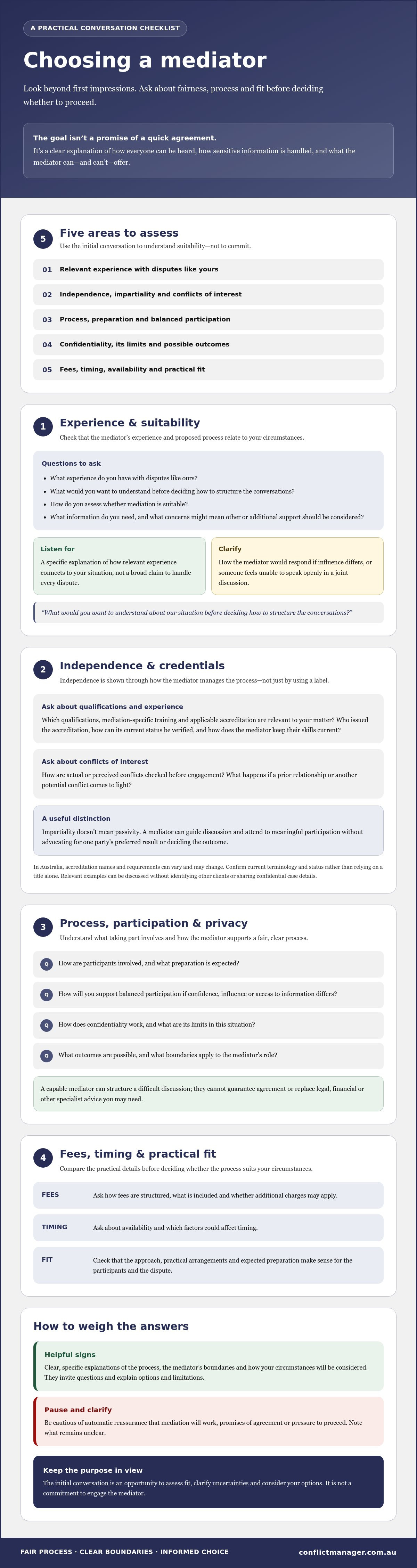
- Use the questions to ask a potential mediator to assess independence, relevant experience and whether their approach suits your situation.
- Ask how participants are involved, what preparation is expected and how confidentiality and its limits apply.
- Compare fee structures, inclusions and possible additional charges, as well as availability and factors that may affect timing.
- Look for clear, specific answers about process and boundaries rather than promises of agreement or pressure to proceed.
- Use the initial conversation to clarify fit and uncertainties. It’s an opportunity to assess your options, not a commitment to engage.
Questions to Ask a Potential Mediator Before You Begin
Choosing a mediator can feel difficult when trust is low or important relationships are strained. An initial conversation can bring some order to the decision. It’s a chance to assess suitability and fit, not a commitment to proceed.
Use the questions to ask a potential mediator to explore five areas: relevant experience, independence, process, practical arrangements and how you’ll make a decision. If mediation is unfamiliar, Mediation offers a broad overview of the role and different approaches. Keep expectations grounded: mediation provides a structured setting for discussion, but it can’t guarantee agreement or replace legal, financial or other specialist advice you may need.
What experience do you have with disputes like ours?
Ask about the mediator’s experience with the type of dispute, participants and complexity involved. A family disagreement about significant assets may call for a different approach from conflict among colleagues during organisational change. Ask how they would adapt the process to those dynamics. You can also invite them to describe relevant experience without identifying other clients or disclosing confidential information.
Listen for a clear explanation of how their experience relates to your circumstances, rather than a general claim that they handle every kind of dispute. For example, ask: “What would you want to understand about our situation before deciding how to structure the conversations?”
How will you assess whether mediation is suitable?
A considered mediator should seek to understand the circumstances before recommending a process. Ask what information they need from participants, how they decide whether mediation is appropriate and what concerns might mean another or additional form of support should be considered.
For example, ask how they would respond if participants have very different levels of influence, or if someone feels unable to speak openly in a joint discussion. Look for a reasoned explanation of options and limitations, not automatic reassurance that mediation will work. If you’re unsure what support is needed, clarify whether you should seek advice from an appropriately qualified professional.
Before the conversation ends, note what remains unclear. A mediator who explains what they can and can’t offer, and invites questions about the process, gives you a more useful basis for deciding whether to take the next step.
Questions About a Mediator’s Independence, Qualifications and Approach
Independence is practical, not simply a label. A mediator should support a fair process in which participants can explain their perspectives and consider options. They shouldn’t advocate for one party’s preferred result or decide the outcome for everyone. Ask how they manage participation when influence, confidence or access to information differs between people.
Credentials matter, but they’re only part of the picture. Relevant experience and a clear explanation of the mediator’s role help you understand how they’ll approach your circumstances. In Australia, accreditation names and requirements can vary and may change, so confirm the current terminology and status rather than relying on a title alone.
What training, accreditation and experience should I ask about?
Ask which qualifications and mediation-specific training are relevant to your matter, and whether the mediator holds an applicable accreditation. If so, ask who issued it and how you can verify its current status. You can also ask how they keep their knowledge and skills current through professional development.
Experience should relate to your situation, not just a broad claim of expertise. Invite the mediator to describe comparable process experience, such as working with family members around significant assets or supporting stakeholders through organisational change. They should be able to explain their approach without identifying other clients or sharing confidential case details.
How do you manage neutrality and conflicts of interest?
Ask how the mediator checks for actual or perceived conflicts before engagement. This might include a prior professional relationship with a participant or a connection to an organisation involved. Find out what they would disclose if a potential conflict emerged and how participants would be involved in deciding what happens next.
A useful answer will distinguish impartiality from passivity. The mediator can guide the process, set expectations for discussion and attend to whether participants have a meaningful opportunity to contribute, while remaining responsible for neither side’s preferred result. Ask where they draw the line between structuring the conversation and giving advice or making decisions.
Consider the answers together. Qualifications without relevant process experience may leave questions unanswered; experience without clarity about boundaries may do the same. If internal conversations have become difficult to manage, external conflict facilitation support may be one option to explore. Look for an explanation that is specific to your context, transparent about limits and open to further questions.
Questions to Compare the Mediation Process, Confidentiality and Outcomes
A mediator’s description of the process should make the next steps easier to understand. To compare options fairly, ask each mediator the same questions about preparation, session structure, participant involvement, confidentiality and what happens afterwards. The answers can reveal practical differences that a general promise of a “safe” or “confidential” process won’t.
What happens before, during and after a mediation?
Ask what happens before the first session, including whether participants speak with the mediator separately, what preparation is expected and what information they may be asked to provide. Clarify who will take part, how sessions are arranged and whether the format can change if a joint discussion isn’t suitable.
During the process, find out how the mediator manages communication when participants have different perspectives or struggle to be heard. Ask how they’ll keep the discussion focused without deciding who is right. Then clarify what follow-up, if any, is available and what sits outside the mediator’s role. A clear explanation helps you understand the process without assuming it will unfold in a fixed way.
How are confidentiality and records handled?
Don’t assume confidentiality works identically in every mediation. Ask the mediator to explain, in plain language, what information is treated as confidential in your specific context and what limits may apply. Clarify who may receive information, whether anything is shared between participants, and how the mediator handles notes, records or documents created during the process.
This is especially important where family members, advisers, employees or other stakeholders may be involved. Ask who needs to be included in any information-sharing arrangement and when. If a point remains unclear, request it in writing and consider whether you need advice from an appropriate professional before sharing sensitive material.
Finally, ask how any agreement or points of understanding are recorded. Will participants receive a written summary, and who is responsible for checking or formalising it? A mediator can explain the process they use, but their account shouldn’t be treated as a universal legal guarantee. If you need to understand the effect of proposed terms, seek separate specialist advice before relying on them.
These are essential questions to ask a potential mediator because a sound process depends on informed participation, clear boundaries and shared expectations. Compare the answers, not just the labels. Specific explanations of what happens, who is involved and what the mediator does not do can help you decide whether the arrangement feels workable for everyone.
Questions About Fees, Timing and Practical Fit
Practical arrangements can shape whether mediation is workable for everyone involved. Ask each mediator the same questions about fees, availability, preparation and format. Clear answers make it easier to compare the full engagement, rather than focusing on one quoted figure or assuming a set timeframe.
How do fees and engagement terms work?
Ask how fees are calculated and invoiced, and how payment is shared between participants if that applies. Clarify what the fee includes, such as preparation, time outside sessions, written summaries or follow-up. Check whether extra work may be charged separately, and ask about cancellation or rescheduling terms before agreeing to proceed.
Request the engagement terms in writing so you can review them and raise anything unclear. The lowest quoted fee may not represent the best fit if important work is excluded or the billing arrangements are difficult to understand. Compare the scope and clarity of each proposal, not just the headline amount.
Will the proposed format work for everyone involved?
Ask about available formats, such as in-person, online or separate sessions, where appropriate. Discuss accessibility, communication needs, privacy and participant availability before arrangements are confirmed. Timing may depend on preparation, the number of people involved and the complexity of the issues, so ask what could affect scheduling rather than expecting a fixed duration.
It’s also worth asking what the mediator would do if a participant felt unable to contribute meaningfully. Their answer can help you assess whether the process allows concerns to be raised and arrangements reconsidered where needed.
Use a simple comparison table to keep the answers consistent. Record specifics, not impressions:
| Compare | What to note |
|---|---|
| Experience | Relevant context and comparable process experience |
| Approach | How the mediator structures participation and adapts the format |
| Practicalities | Fee inclusions, additional charges, preparation and availability |
| Unanswered questions | Anything to clarify before deciding whether to engage |
The questions to ask a potential mediator should help you judge whether the proposed process is clear and workable for the people involved. If your organisation is weighing external support, you can discuss organisational conflict management as one option for structuring difficult conversations.
How to Choose a Mediator and Take the Next Step
Choosing a mediator is a judgement about process and fit, not a search for someone who can promise a particular result. Bring your notes together and work through the decision in a deliberate order:
- Define your needs. Identify the issue, who needs to participate and what you hope a structured discussion might help you explore.
- Ask consistent questions. Use the same core questions with each mediator so their answers are easier to compare.
- Compare the responses. Note relevant experience, approach, practical arrangements and any concerns.
- Clarify uncertainties. Follow up on unclear terms or boundaries before deciding whether to proceed.
Specific, transparent answers are more useful than guarantees, pressure or claims that resolution is assured. A mediator should be able to explain their role, describe how they would approach your circumstances and acknowledge where the process has limits. Keep a short record for each person: strengths, concerns and follow-up questions. A written comparison can help you make a considered choice, particularly when stress makes it harder to hold every detail in mind.
What answers suggest a good potential fit?
Look for relevant experience, a coherent process and clear professional boundaries. Notice whether the mediator makes room for different participants and perspectives, rather than focusing only on the person who speaks most readily. An unclear answer isn’t automatically a reason to rule someone out, but evasiveness, unsupported guarantees or vague engagement terms are reasons to ask again and seek clarification before deciding.
What should I prepare before making contact?
Prepare a concise outline of the issue, who may need to take part and what you hope to explore. You don’t need to share every sensitive detail in an initial enquiry. A brief, factual summary can help the mediator explain what they would need to understand before discussing suitability.
Bring a short list of questions about process, independence, confidentiality and engagement terms. Add any practical considerations that could affect participation, such as communication needs or availability. This preparation gives you a steadier basis for the conversation and makes it easier to assess whether the proposed approach fits.
If you’re considering external facilitation, you can discuss whether a facilitated process could suit your situation with Conflict Manager. The questions to ask a potential mediator are there to support an informed choice; the right next step is one that feels clear, appropriate and free from pressure.
Make Your Next Step a Considered One
The questions to ask a potential mediator help you compare more than credentials. Look for relevant experience, a transparent process, clear boundaries and practical arrangements that allow participants to take part meaningfully. Specific answers give you a sounder basis for choosing than promises of a guaranteed result.
Before deciding, note each mediator’s strengths, concerns and any points that still need clarification. Mediation can structure a difficult conversation, but it doesn’t ensure agreement or replace specialist advice where that’s needed.
Conflict Manager works with high-net-worth families through family office mediation, supports organisations navigating structural change and high-emotion situations, and provides stakeholder facilitation focused on clarity and sustainable outcomes. If internal discussions have become difficult to navigate, discuss whether a facilitated process could suit your situation.
A considered conversation can help you understand the options and choose a next step with greater confidence.
Frequently Asked Questions
What questions should I ask a potential mediator?
Ask about their experience with disputes like yours, how they assess suitability and how they support a fair process. Clarify their training and any relevant accreditation, how sessions are structured, who may participate, and how confidentiality and records are handled. Also ask about fees, preparation, availability and what happens if no agreement is reached. Use the same core questions with each mediator so you can compare their answers consistently.
How do I know if a mediator is impartial?
Ask how the mediator checks for actual or perceived conflicts of interest and what they would disclose if a concern arose. A mediator should guide a fair process, not advocate for a participant or determine the preferred outcome. Notice whether they explain how each person can contribute and what they’ll do if participation feels unbalanced. Clear boundaries and a willingness to address concerns are more useful indicators than a simple claim of neutrality.
Should a mediator have formal qualifications or accreditation in Australia?
Ask what mediation-specific training, qualifications and relevant experience the mediator has, and whether an accreditation applies to your type of matter. Accreditation arrangements can differ between contexts, so don’t assume one title or standard applies everywhere. Request the name of the accrediting body and a way to verify current status. Consider credentials alongside practical experience and a clear explanation of the mediator’s role and approach.
Is mediation confidential in Australia?
Confidentiality depends on the mediation context and the arrangements that apply. Ask what information may be shared, who may receive it, how records are handled and what limits could apply. Clarify whether anything said in a separate conversation may be shared with other participants. Don’t treat a general assurance as a universal legal guarantee. If the consequences of sharing information are unclear, consider seeking advice from an appropriate professional before proceeding.
Can I change mediators if the fit does not feel right?
You can raise concerns about fit and ask whether a different mediator or process is possible, but the available options may depend on the engagement terms and the participants’ arrangements. Check any relevant cancellation or change terms before proceeding. If an issue emerges during mediation, explain what isn’t working and ask how it could be addressed. A change may require discussion with the other participants, so clarify the steps rather than assuming you can switch unilaterally.
How much does mediation cost, and what should I check?
Costs vary, so request a written fee structure in Australian dollars before you agree to engage a mediator. Ask how fees are calculated and invoiced, what preparation and follow-up they include, whether work outside sessions costs extra, and how payment is shared between participants. Clarify cancellation or rescheduling terms too. Compare the scope and transparency of each proposal, not only the quoted amount, and ask the mediator to explain any unclear charges.
What happens if mediation does not result in an agreement?
If participants don’t reach agreement, the mediator can explain what was discussed, any next steps within their role and whether further conversations are possible. Mediation doesn’t guarantee a resolution, and participants may need to consider other options or seek specialist advice. Ask in advance how outcomes or areas of progress are recorded, and whether any follow-up is available. You can still use the process to clarify differences, even if no final agreement is reached.


